XII’th time’s the charme! For this year, the Codevember event took place in Karlsruhe, home of Germanys first Octopus Döner (which none tasted AFAIK). This time, the host was the FZI Forschungszentrum Informatik, an applied research center for IT solutions and boy, did we have fun.
Mobility4BW – open mobility data from Baden-Württemberg accessible on your phone
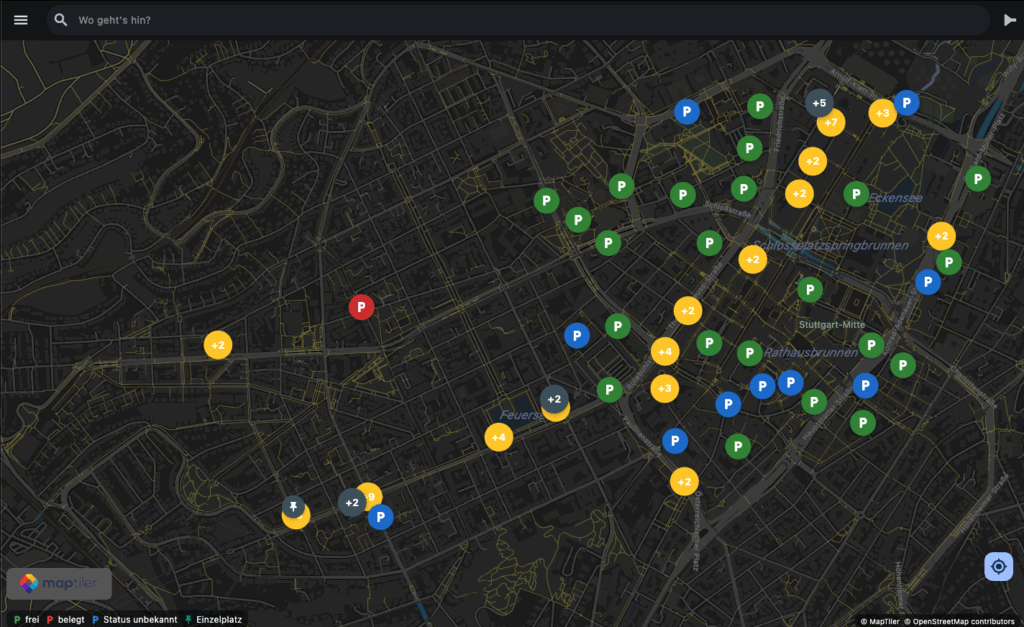
One project addresses the accessibility of open parking spaces, bike sharing, and public transportation route data: Mobility4BW, an app for Android and iOS (soon), developed using Flutter/Dart. It is solely fed by OpenData from MobiData BW, which provides information about public parking services, transportation, and mobility sharing offers through different standard formats and APIs. To support offline functionality and additional redundancy, the app performs caching and utilizes a self-hosted proxy server for the GTFS transportation feed and geocoder. Check out the live demo website for a quick glimpse and the codebase at https://github.com/p-schulz/mobidata-bw-flutter!
Tour through the FZI House of Living Labs
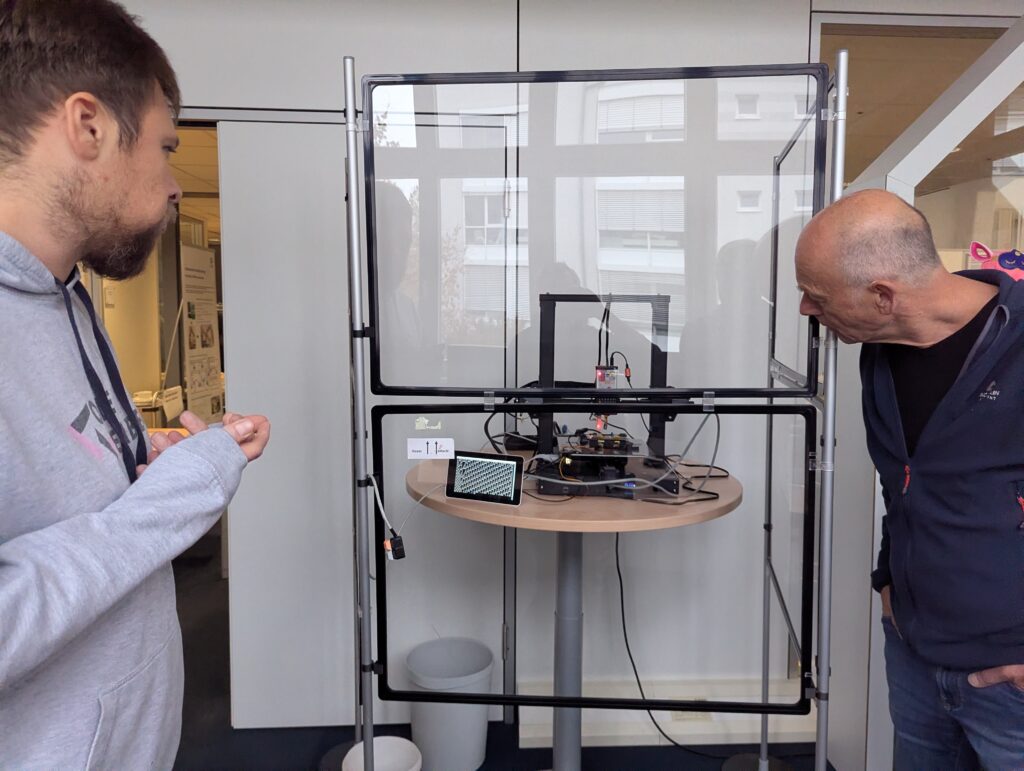
In a small guided tour through the research environment FZI House of Living Labs, the guests of Codevember XII were able to experience the on-site research prototypes and got an idea of the various fields of FZI’s application areas.
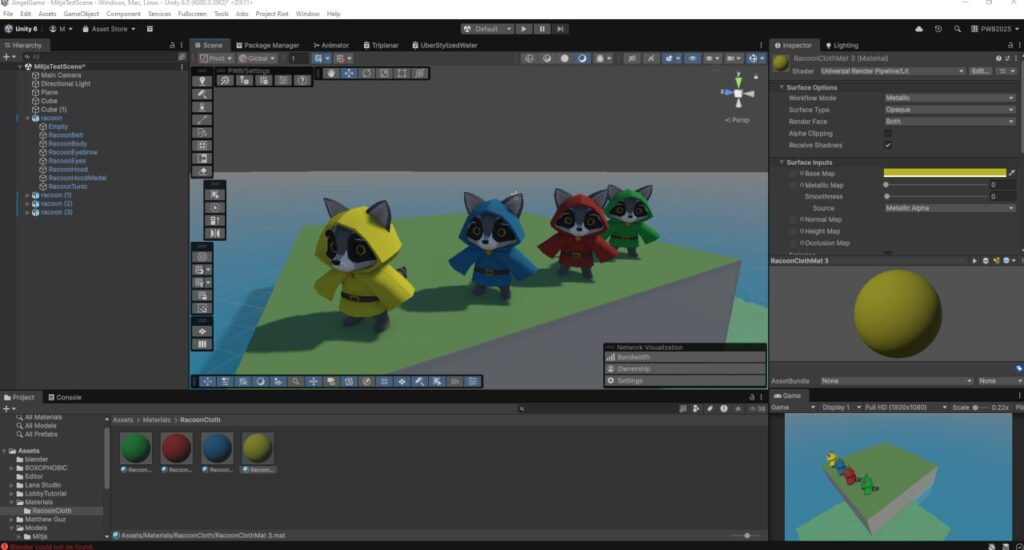
project riot: a multiplayer wave defense
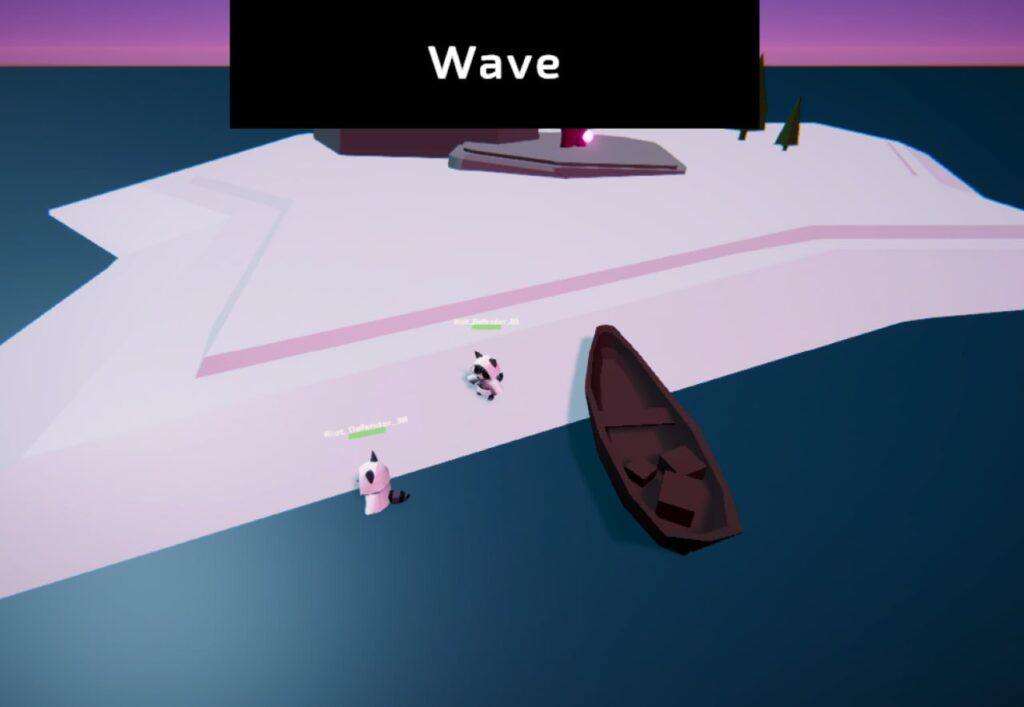
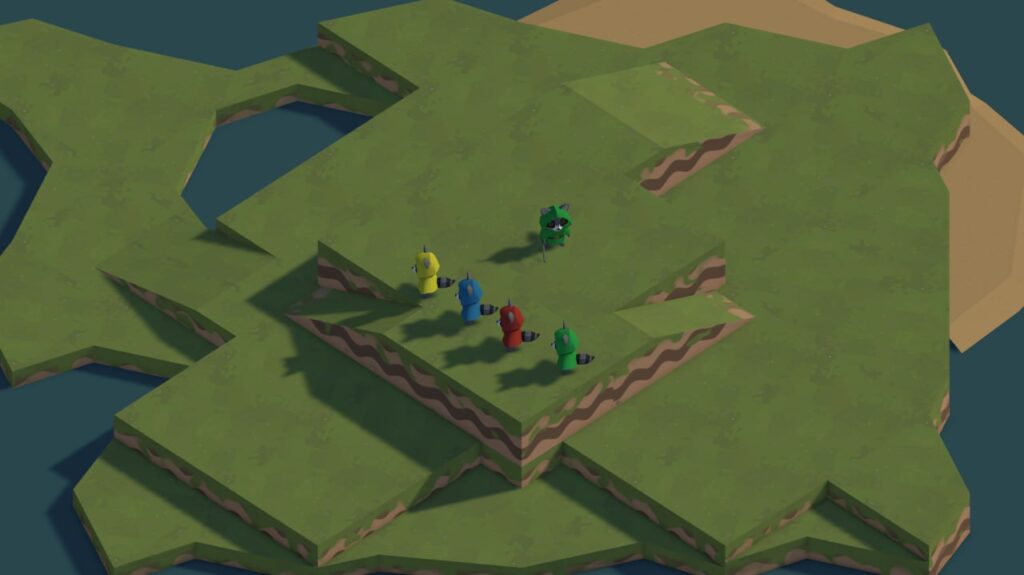
We had another entry, that head a headstart prior to the codevember: project riot. A small Unity multiplayer game that features cooperation and teamwork: While you get resources through fishing, you also need to make sure to defend your base from enemies.
While the prior work went quite well, we found out to have struggles getting the network running within a new environment. Therefore, we focused more onto making everything more robust as well as a lot of conceptional work (levels, story, mechanics). This was also quite nice and refreshing to get a new perspective on the already integrated features.
Big thanks
Shout out for every participant and guest visiting our CodeVember XII event! Without your open mind and ambition, a creative space is just a room with furniture and blinking LEDs. The team of CodeVember e.V. is hoping for you engagement in the year 2026 and – see you soon 🙂
Der Codevember e.V. veranstaltet jährlich einen Hackathon, bei dem kreative Ideen umgesetzt werden. In diesem Jahr findet der Codevember erstmals gemeinsam mit dem FZI Forschungszentrum Informatik in Karlsruhe statt.
Durch die Zusammenarbeit wollen wir nicht nur Projekte umsetzen, sondern auch Einblicke in aktuelle Technologien geben, neue Perspektiven eröffnen und zeigen, wie kreative Ansätze gesellschaftlichen Mehrwert schaffen können. Dabei ist das Ziel, dass Menschen aus unterschiedlichen Bereichen aufeinander, die ihr Wissen, ihre Erfahrungen und ihre Neugier miteinander teilen – und so voneinander lernen.
Der Hackathon wird im Game Jam Format veranstaltet. Das bedeutet, dass jede Person zu Beginn eine Idee pitchen kann und sich nach mehreren Voting-Runden dann einer Ideengruppe zuordnen kann. Die Projektideen können aus allen Bereichen – nicht nur dem Gaming – stammen. Und falls ihr eure eigene Ideengruppe seid bieten wir hier euch hier einen Raum zum Fokussieren und Austauschen.
Gepitcht und gevoted wird am Sonntag, dem 02. November um 18:00 Uhr auf unserem Discord. Der Hackathon selbst findet am darauffolgenden Wochenende statt. Wir starten Samstags mit einem Mini Pitch in der jede Person/Gruppe ihr Projekt in 3-5 Sätzen vorstellt.
Falls ihr kommen wollt aber die Pitchrunde am 02.11. verpasst habt, macht nichts! Meldet euch an und stellt euch und eure Idee kurz auf Discord vor.
Sonntag, 02.11.2025
Samstag, 08.11.2025
Sonntag, 09.11.2025
18 Uhr Pitch via Discord
10:00 – 12:00 Uhr Mini Pitch & Hacking Session
10:00 – 12:00 Uhr Hacking Session
12:00 – 13:00 Uhr Mittagessen
12:00 – 13:00 Uhr Mittagessen
13:10 – 13:45 Uhr Führung House of Living Labs (Teilname freiwillig)
13:00 – 15:00 Uhr Hacking Session
14:00 – 20:00 Uhr Hacking Session
15:00 Uhr Finale Präsentationen
Organisatorisches
Der Codevember XII findet dieses Jahr mit freundlichem Dank statt im
Mittag- und Abendessen mit vegetarischen Optionen wollen wir zusammen bestellen – alternativ könnt ihr euch aber auch gerne selbst organisieren.
Die Anmeldung ist Pflicht, die Teilnahme umsonst
Anreise
Es gibt einen Innenhof, auf dem geparkt werden kann (bis zu 8 Autos). Zudem gibt es einen Parkplatz am Hauptfriedhof, welcher 5min zu Fuß weg ist. Weitere Infos findet ihr auch online auf der FZI Seite (Adresse des FZI House of Living Labs nutzen).
Wir sind ein Kollektiv, das sich seit 2014 jährlich für einen Hackathon trifft. 2021 haben wir einen Verein gegründet, um unseren Ideen eine bessere Plattform zu bieten. Wir freuen uns immer über neue Gesichter, neue Ideen und neue Geschichten.
Disclaimer
Wir organisieren das Event ehrenamtlich und sponsoren z.B. die Nutzungsgebühren der Räumlichkeiten über unseren Verein Codevember e.V. Deswegen hier noch ein kurzer Disclaimer:
Haftung Die Veranstalter:innen übernehmen keine Haftung für Personen- oder Sachschäden, die im Zusammenhang mit der Teilnahme am Event entstehen, außer in Fällen von Vorsatz oder grober Fahrlässigkeit. Die Teilnahme erfolgt auf eigene Verantwortung.
Bild- und Videoaufnahmen Im Rahmen des Events können Foto- und Videoaufnahmen gemacht werden. Mit der Anmeldung erklären sich die Teilnehmenden damit einverstanden, dass diese Aufnahmen zu Zwecken der Dokumentation und Öffentlichkeitsarbeit (z. B. auf Social-Media-Kanälen der Veranstalter:innen) unentgeltlich verwendet werden dürfen. (Falls ihr das nicht wollt, kommt bitte auf uns zu und wir klären das individuell).
When writing complex programs in C, one will be confronted with the topic of code redundancy and accessibility control issues. C++ was first introduced in 1983, called “C with classes”, and solves a bunch of hurdles stumpling upon programming in C.
The advantages of object-oriented programming languages
Defining complex data structures in C remembers of defining records in a functional programming language. When defining methods over several similar structures, the code redundancy gets clear – every struct needs its own implementation. For all functions or calls.
In this post, I will show you guys how I set up a C Compiler on my Windows 11 machine. Since as a tutor I will check completed tasks written in C, but I personally want to avoid a big Visual Studio solution for it, I will use the WSL2 on my machine to compile C and the Visual Studio Code IDE for debugging and code checks (also, IntelliSense).
In order to determine the runtime of a recursive function, it is helpful to translate this function into an implicite one. This blog post illustrates a straight-forward approach, intuitively – with exactly 5 steps on a small example. This approach is also applicable for almost every recursive function.
Why Tho?
The reason to resolve a recursive function lies in the analysis and application. When interested in runtime analysis, the implicite function will serve as a guidance for the total runtime of the recursive function. When interested in application, the implicite function will have the same
It is widely known that the security of a system seen as property is not static. Therefore, there cannot exist a general algorithm deciding whether or not a given system is secure in its sense. IT-Security Architects and Engineers are stuck with persistent research of bug reports of the technology the respective enterprise is using. In the industry, IT security is one use case of many others. The types of systems to examine vary depending on context. For instance, the construction of a museum is considered as a system and it is of interest to guarantee that the objects, stored in this kind of facility, are considered safe and sound. In consequence, it is urgent to establish a formal model for system description and security evaluation. There are various challenges to overcome, for instance:
What are the best defensive measures to invest in?
How can it be decided whether a defensive measure from the past is still necessary?
How can newly discovered attacks be efficiently documented?
One of the key properties of a given algorithm is its complexity. A computer scientist is interested in the adequacy of the algorithm runtime relative to the size of the input. While there exist sharp runtime lower bounds for any given algorithm, for upper bounds however, the sky is the limit. It depends on the quality of optimization.