
Making OpenData more accessible
For several years now I’ve been following initiatives around open data, digital infrastructure and smarter mobility in Baden-Württemberg. During a digitization congress hosted by the state’s Ministry of Transport in Stuttgart, I first learned about MobiData BW — an impressive and growing platform that aggregates mobility-related data from across the region. What surprised me, however, was a remark in a conversation with staff on site: despite rich datasets and a really well-maintained web portal (please check it out, it’s awesome), there was still no dedicated mobile app.
This stuck with me. If a service remains hidden behind a browser window, it’s difficult to build awareness and even harder to reach people in everyday life. A straightforward, accessible app could help make the state’s mobility strategy more visible and open data more approachable for everyone.
The Beginning
This year, during our annual Codevember hackathon, I pitched the idea of a simple, intuitive mobile companion for MobiData BW. The goal was not to reinvent mobility apps, but to make the existing datasets — from parking availability and bike-sharing all the way to public transport routes — more accessible, more discoverable, and easier to explore on the go.
Over the weekend we built a first prototype, and the idea quickly grew larger than expected. The app now integrates nearly all published categories from the platform, displays them on an interactive map, and even includes a custom backend proxy that serves GTFS-based public transport data when live endpoints aren’t available.
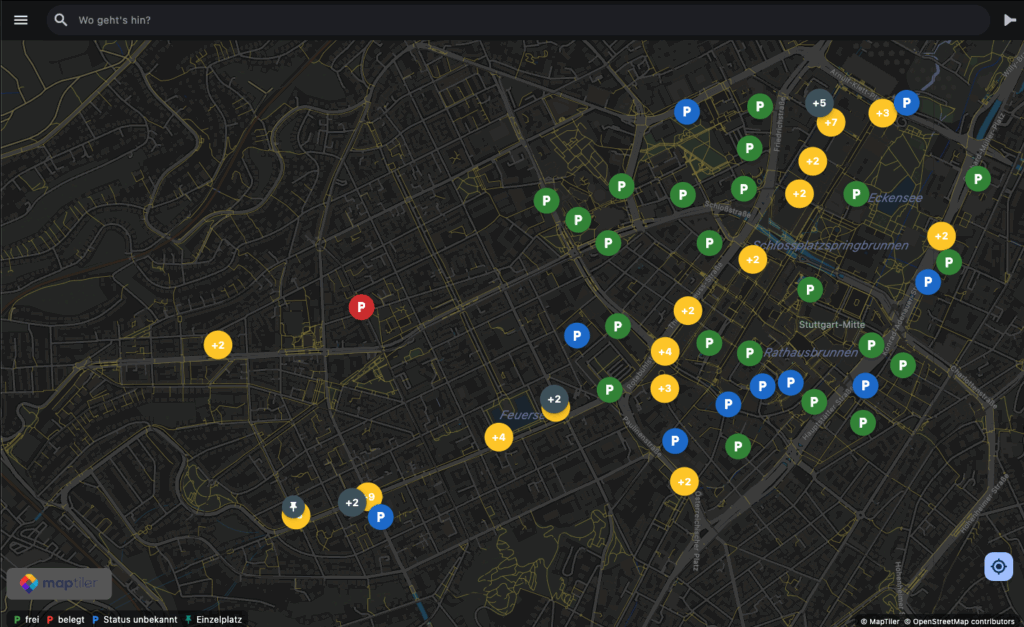
The Magic behind it
Thanks to Flutter, the app is fully cross-platform: it runs on Android and iOS, works flawlessly on desktop systems, and even ships as a Web Demo directly from the same server that powers the proxy API. This independence from device ecosystems — and the ability to reuse UI and business logic across platforms — made it possible to iterate quickly while keeping the application consistent and lightweight.
Why it matters
In the end, this project grew out of a simple motivation: open data is only as valuable as its accessibility. With a mobile interface, more people can explore the mobility options around them, and hopefully gain a better understanding of the efforts being made toward sustainable, modern transportation.
The app is still evolving, but the mission remains the same — making open mobility data easier to use and helping these services find their audience. If you’re curious, the demo is already publicly available; more features and refinements are on the way. Check it out on https://github.com/p-schulz/mobidata-bw-flutter